Product Information Management (PIM)

The PIM software for manufacturers and distributors with complex catalogs

Marketing, sales and technical product information live in a dozen systems that disagree. Pimcore puts them in one governed source, so every channel says the same thing.
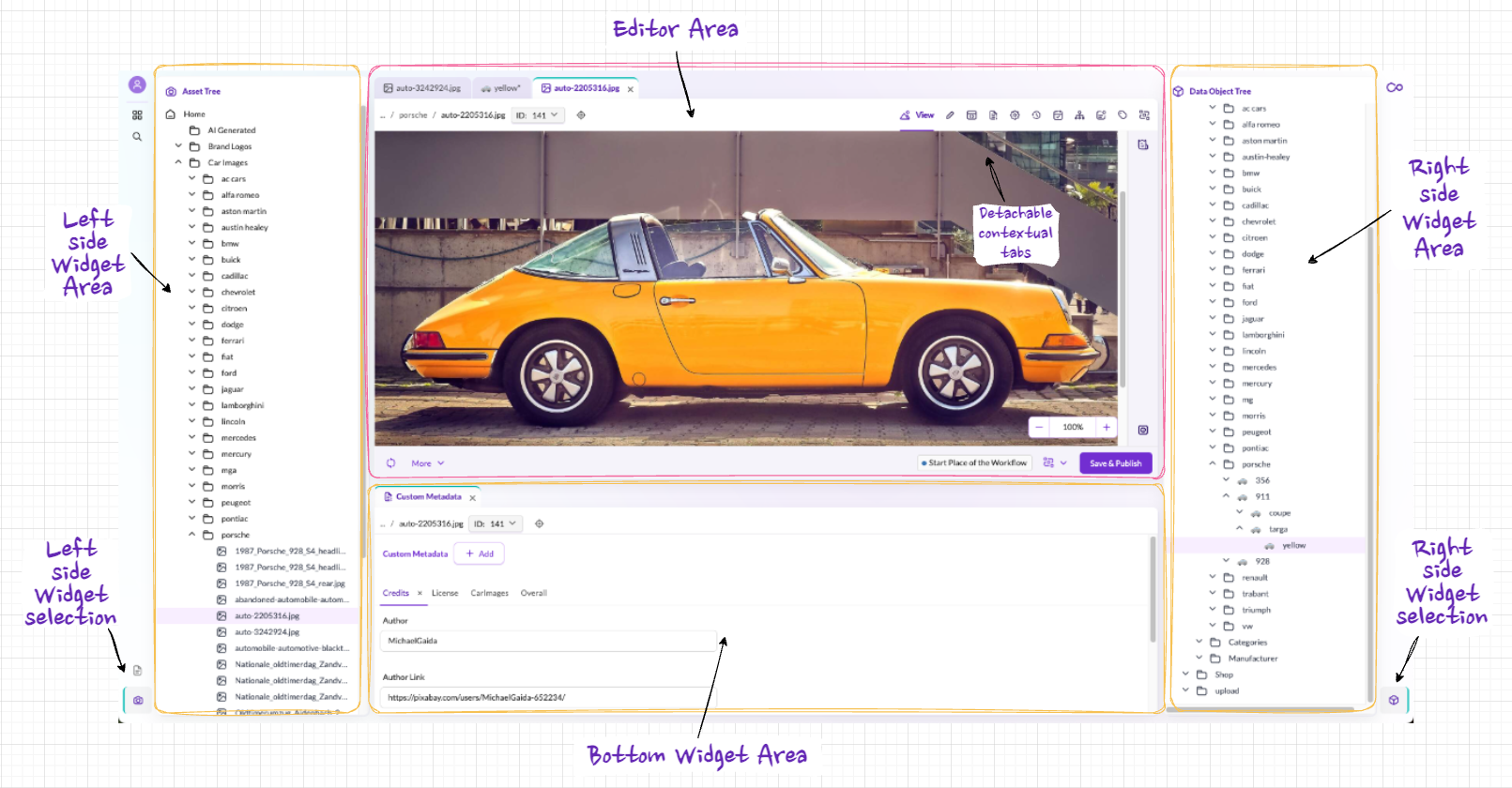
studio-ui-layout-9690561c84f450db9322d6b30071bd21
Gartner Peer Insights
Customers' Choice
4.6 / 5

Trusted by 118,000+ companies

Why it matters

Turn product data into growth, on every channel

In commerce, the product detail is the sale. Here is what changes when your data lives in one governed source.
  • Today: nobody trusts the data One source your team can trust Product data scattered across systems means no one knows which version is right. Pimcore keeps one governed record, consistent on every channel and team.
  • Today: teams re-key everything Less manual work, fewer errors Manual re-keying is slow and error-prone. Pimcore automates the repetitive steps, so teams ship faster and get it right the first time. 
  • Today: generic content gets ignored Experiences that convert Inconsistent, generic product content loses the sale. Pimcore feeds accurate, relevant experiences across every touchpoint, so more visitors buy.
  • Today: you pay for every workaround Flexibility to differentiate Standard systems box you in. Build only what makes you different, and spend the rest on innovation instead of workarounds.
  • Today: projects run long and risky Faster, lower-risk projects Long timelines and brittle integrations sink projects. Pimcore's adaptable, open architecture gets you live faster with less dependency risk.
  • Today: the vendor owns your setup Your data, your rules Locked-in platforms decide how you work. With Pimcore's open-core platform you own your data and connect everything, from legacy systems to the newest apps.

The capabilities behind the platform

Six capabilities cover the core PIM job: getting data in, keeping it clean, and getting it out to every channel.
Click any one to see how it works.

Pimcore's advanced data modeling allows businesses to create tailored, scalable, and highly adaptable data models for any industry. With over 45 customizable data components, Pimcore’s no-code interface simplifies the creation and management of complex data relationships across structured, unstructured, and binary assets.

Features

Pimcore unifies structured, unstructured, and binary data into customizable models, forming the backbone of a smart data management strategy. This powerful framework is central to Pimcore, making it the ideal solution for managing any data type, complexity, or volume.

Features

Pimcore’s integrated Data Quality Management offers a comprehensive toolset to ensure the highest standards of data quality, leveraging real-time reporting, automated enforcement, and AI-powered insights to maintain data integrity and accuracy.

Features

Pimcore’s API-first approach offers flexible and powerful tools for data onboarding, including integrated ETL processes, data matching, cleansing, and various interfaces like the Pimcore Data Hub and Product Experience Portals.

Features

Pimcore’s data distribution capabilities ensure efficient, real-time data sharing across various channels and systems. By leveraging flexible integration options and automated workflows, it streamlines data distribution for enhanced operational efficiency and consistency.

Features

Pimcore’s Workflow Automation centralizes and streamlines data and experience management with a sophisticated workflow engine, visual designer, and integration with third-party tools like Teams and Slack. Pimcore Copilot further enhances automation through AI/ML-powered assistance.

Features

Pimcore’s Analytics & Reporting capability allows for robust data analysis, monitoring, and reporting. Leveraging integrated dashboards and third-party tools, it provides invaluable insights into data quality and intelligence, enhancing decision-making processes across various domains.

Features

Pimcore DXP empowers businesses with smart multi-channel publishing, enabling seamless content management, delivery, and syndication across all channels—digital, social, mobile, print, and POS—with integrated AI/ML capabilities for transformative and personalized experiences.

Features

Pimcore's DAM centralizes and manages all media assets, providing a scalable, high-performance platform that integrates with your data and digital experience management strategies.

Features

Pimcore’s Brand Portals offer a centralized, customizable platform for managing and distributing brand assets, ensuring consistency across all channels.

Features

Pimcore's AI-driven automation with the Pimcore Copilot enhances data and experience management, ensuring businesses stay ahead of the competition. With integrations to tools like Power Automate, Zapier, and n8n, it delivers tailored automation, boosting efficiency, ROI, and time to market.

Features

Pimcore’s robust user management system supports large-scale data and experience management, offering secure SSO, 2FA, and detailed role and rights management down to the field and content level, ensuring compliance and security in global enterprise environments.

Features

Pimcore's Asset Experience Portals provide real-time access to digital assets, enabling seamless search, filtering, and sharing. Ideal for internal and external stakeholders, these customizable portals enhance collaboration and data management efficiency.

Features

Pimcore offers limitless extension and customization possibilities, empowering businesses to tailor every aspect of the platform to meet their unique challenges, thanks to its open-core architecture and flexible licensing.

Features

Not ready to talk yet?

A PIM Buyer’s Guide: 7 Steps to Success

PIM software is a game changer for managing product information more efficiently and effectively. But how do you choose the right PIM software for your business? 

Connects to the systems you already run

Pimcore is API-first, so your ERP, shop, and channels stay in sync without a rebuild. REST, GraphQL, and the Data Hub handle the rest.
  • ERP & MDM

    SAP
    Microsoft Dynamics
    Oracle
    Infor
    Epicor

  • Commerce

    Magento
    Shopware
    Shopify
    SAP Commerce

  • Channels

    Amazon
    Google
    eBay
    2,500+ via Productsup

  • Integration

    REST
    GraphQL
    Data Hub
    n8n · Zapier · iPaaS

Results our customers can put a number on

  • Volkswagen Group Charging GmbH

    Automotive & Vehicles

    Volkswagen Group Charging GmbH uses Digital Commerce and DXP / CMS to deliver ? Revenue.
    • 3 Months Implementation Time
    • 1 central e-commerce platform
  • LEDVANCE GmbH

    Manufacturing

    LEDVANCE GmbH uses DXP / CMS and PIM / MDM to deliver 60% Shortened Time to market.

    • 60% Shortened Time to market
    • 25% reduced Cost of Ownership
    • 15% Product attributes
  • notebooksbilliger.de AG

    Retail

    notebooksbilliger.de AG uses PIM / MDM and DAM to deliver 12 000 Product attributes.

    • 12 000 Product attributes
    • 3 Million Media Assets

Comparing Options

Weighing Pimcore against Akeneo?

An evidence-based, capability-by-capability comparison for enterprise PIM, including where each fits and how pricing works. No sign-up needed.

Pimcore Akeneo
  • Pimcore 35
  • Akeneo 31

See Pimcore PIM in action

This demo is only a glimpse. Pimcore's real strength is how far it flexes to your setup. For a walkthrough on your industry and your data, talk to our team.

A clear path from kickoff to go-live

PIM is a big project. Pimcore and a global network of certified partners run it in defined stages, so you always know the next step.
  1. Discovery Map your data, channels, and systems.
  2. Data model Shape the model to your catalog, no-code.
  3. Integrate Connect ERP, shop, and channels via the Data Hub.
  4. Go live Publish everywhere and refine with your team.

FAQs:

What is a PIM system, and how is it different from MDM?

A PIM system is the single place where you model, enrich and publish product data to every channel. MDM is broader and governs all business-critical data, including suppliers, customers and locations. Most companies start with PIM because product data touches revenue first, then extend into MDM. In Pimcore both run on the same core, so that step needs no migration.

How is a PIM different from an ERP, and do I need both?

Most companies need both. An ERP handles transactional data: stock, orders, prices, logistics. A PIM handles descriptive data: attributes, texts, media, translations and channel variants. ERPs get expensive fast when you push rich marketing content in many languages through them. The ERP stays the source for commercial data, and the PIM becomes the source for everything a customer sees.

Can a PIM manage digital assets, or do I need a separate DAM?

With Pimcore you do not. A PIM manages product data and a DAM manages the images, videos and documents that belong to it. Run them as separate systems and you maintain the links between them by hand. Pimcore includes DAM on the same core, so an asset is tied to the product, the variant and the channel it belongs to, and one update reaches every channel at once.

Which problems does a PIM solve first?

The fastest wins are usually time to launch a new channel, the share of products with complete data, and the number of manual corrections. Teams stop re-keying between systems and stop reconciling which version is right. Whether that shows up as faster launches, fewer returns or better conversion depends on your setup, so measure your own baseline before and after.

Is Pimcore open source?

Pimcore is open core. The Community Edition is free under GPLv3 and you can run it yourself. Professional and Enterprise add commercial licensing, support and SLAs on top of that core. Every edition keeps the open APIs and full access to your own data, so you are not licensed per product record and your data model stays yours.

How is Pimcore different from Akeneo and other PIM tools?

Pimcore combines PIM with DAM, MDM and experience management on one open-core platform, so you are not stitching separate tools together. Standard PIM products fit standard needs. Pimcore adapts to non-standard data models and processes, and you own your data without per-record licensing.

What does Pimcore PIM cost?

Pimcore licenses by edition, not by product record, user seat or API call. The Community Edition is free. The Professional Edition is 9,900 $ per year and the Enterprise Edition 29,900 $ per year, both including commercial licensing and support. Pimcore PaaS is quoted on your setup. Because nothing is priced per record, your licence cost stays flat as your catalog grows.

Does Pimcore cover product experience management (PXM)?

Yes. Pimcore covers product data, digital assets, relationships and the publishing layer on one core, which is what PXM describes: PIM plus the assets, content and channel logic that turn product data into an experience. You do not need a separate PXM tool on top of your PIM.

What kind of product data can Pimcore manage?

Any product or corporate data, structured, unstructured or binary. Pimcore offers more than 50 data types and a flexible data model, so you shape it to your catalog instead of forcing your catalog into a fixed schema.

How much product data and how many SKUs can Pimcore handle?

There is no built-in limit. You manage as many products and SKUs as your database and server capacity allow. Pimcore runs at Fortune 500 scale with millions of products, assets and pages.

How does Pimcore enforce data quality and validation?

Through mandatory fields, rule-based validation and automated checks that make completeness and consistency measurable. Reports and dashboards show where data is missing and why, and workflows route the corrections, tasks and approvals. Your data model stays flexible: you can adopt an existing model and adapt it step by step later. External requirements such as shipping weight, hazardous goods labels or nutritional values can be added at any time. Unstructured information like documents, certificates or email threads attaches to the product it belongs to.

Does Pimcore offer a headless API (REST and GraphQL)?

Yes. Pimcore serves product information headless over REST and GraphQL, so frontends, apps and services read or update data without touching the PIM interface. The Data Hub handles controlled exports, webhooks and events automate downstream processes, and scheduled jobs keep push and pull integrations stable. You deliver to any frontend or channel without coupling it to the platform.

Does Pimcore connect to our ERP and shop system?

Yes. Pimcore uses an API-driven architecture with the Data Hub to connect ERP, CRM and shop systems like Magento, Shopware and Shopify, usually with a bi-directional interface to your master-data source.

Can Pimcore push product data to marketplaces like Amazon, Google Shopping or eBay?

Yes. Pimcore syndicates product data to 2,500+ channels and marketplaces through standard APIs via its technology partner Productsup.

How does Pimcore PIM work together with master data management?

PIM and MDM run on the same core in Pimcore, not as two products you connect. You model product data and the business data around it, suppliers, customers, locations, in one place and govern it with the same rules. If you already run an MDM such as SAP, Informatica or Stibo, Pimcore connects to it bi-directionally through the Data Hub and takes the product domain.

How much work is it to migrate our existing product data into Pimcore?

More predictable than a classic ETL project, because Pimcore combines extraction, mapping, transformation and validation in one place. You pull product data out of ERP, commerce, Excel, CSV, JSON or XML, map it into your target data model including variants, clean up inconsistencies and check quality before go-live. Migrating in stages instead of one big bang keeps risk and rework down.

How are roles, permissions and approval workflows handled?

Pimcore manages roles and permissions down to the individual field. Workflow automation runs on states and transitions, so you define who enriches, who reviews and who publishes, and which transitions happen automatically. Role-based views hide what a user does not need to see. SSO and 2FA cover distributed teams. Separate workflows can run for enrichment, review, compliance and publishing.

Can we run Pimcore in the cloud, on-premise or as PaaS?

All three. Pimcore is not SaaS. You run it in your own cloud setup, on-premise, or as Pimcore PaaS, depending on your compliance and operations requirements. Scaling comes from the API-first architecture, the headless Data Hub, caching and horizontal scaling, so data access stays stable as product volumes, languages, channels and users grow. CDN integration covers global delivery.

Is Pimcore secure given its open-core model?

Yes. Pimcore Secured adds hardened security and strict license compliance on top of the platform, and Pimcore runs on-premise or in the cloud to meet your compliance requirements.

Best in Class Product Experience Manangement

Pimcore revolutionizes product experiences from start to finish. Discover our powerful capabilities, trusted by thousands globally and recognized as Gartner's Customers' Choice.

Most flexibe and Cross-Industry

Data Modelling

Achieve precise, scalable, and efficient data structures tailored to your business needs.

Intuitive and Efficient

Data Management

Experience seamless, user-friendly data handling designed to streamline your business operations.

Reliability and Consistency

Data Quality Management

Ensure precise, reliable, and high-quality data to drive your business success.

Enhance productivity and efficiency

Workflow Management

Enhance productivity and efficiency with seamless, user-friendly workflow management tools.

Pure Automation Magic

Automation &
Pimcore Copilot

Leverage advanced automation and AI to enhance productivity and drive intelligent decision-making.

Unlock Insights

Analytics & Reporting

Unlock powerful data-driven insights and streamline reporting for smarter business decisions.

Any Data. Any Channel.

Multichannel Publishing

Ensure consistent and seamless content distribution across all channels effortlessly.

Accessible to All

Product Experience Portals

Escape the PIM silo and make data accessible to all stakeholders effortlessly.

Open Data Access

Data Distribution

Streamline feed management and ensure seamless, accurate data distribution across all channels.

Get a demo fitting your requirements

Book a free guided tour with an expert, or explore on your own.
Try Pimcore Yourself
Receive direct access to a demo with pre-filled data across various modules.

We will use your personal data solely to process your request. For a better localized experience, we might share your data with certified solution partners in your geographical region. For more information, please read our privacy policy.

Back
Back