Industry · Automotive Aftermarket
One governed source of truth for parts, fitment, and supplier data. Add a part once and publish it correctly to every branch counter, B2B portal, and distributor feed the same day.
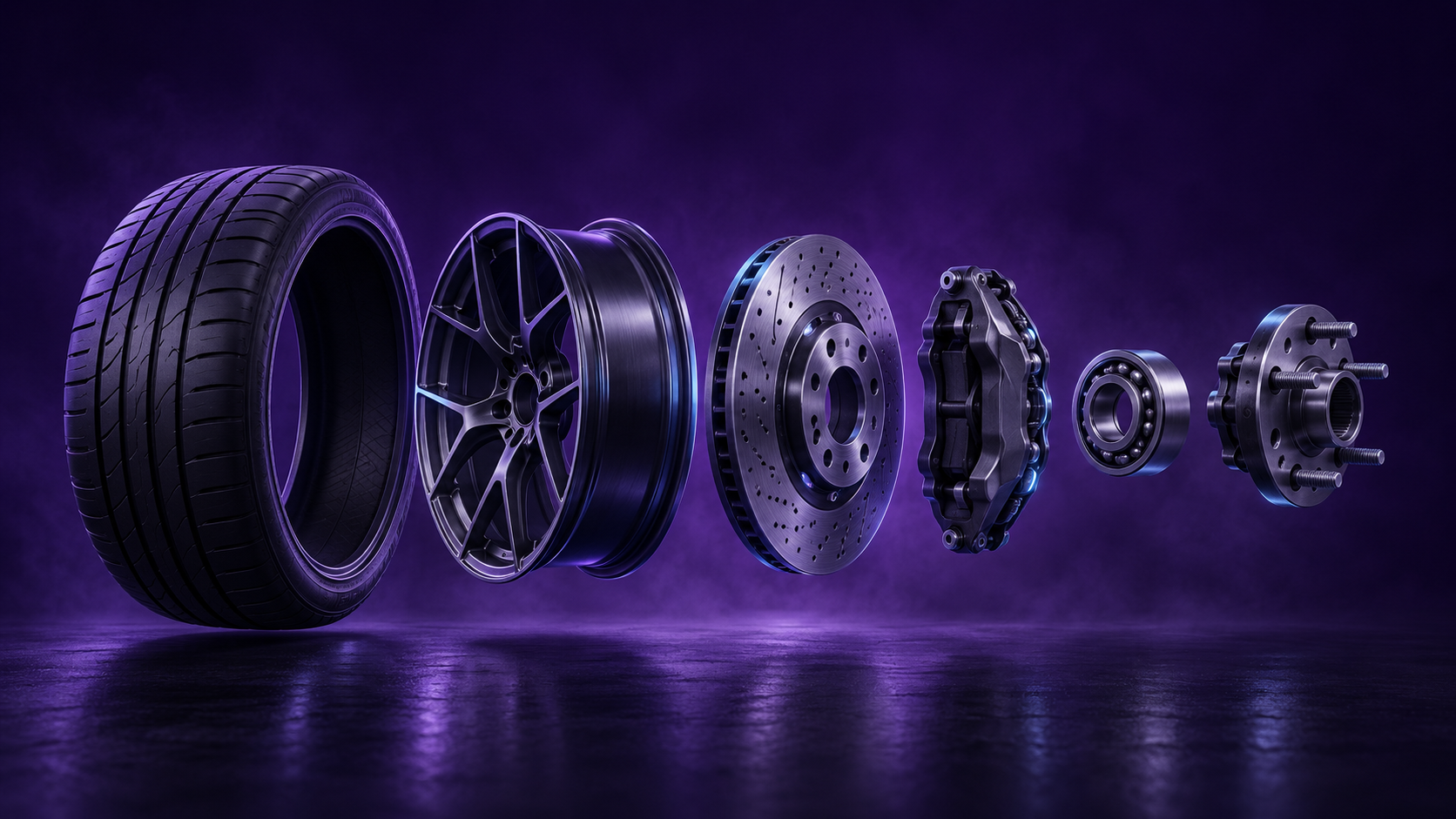
A part number is not enough
Your product records live in your ERP, but fitment details are stashed in a database, a homegrown app, or an add-on. When something changes, you have to update both, and that’s where mistakes creep in: wrong parts get shipped and returned. Fitment data is usually too custom or locked to outside vendors to easily fix, so the headaches never stop.
With data from hundreds of suppliers, you get multiple descriptions and formats for the same part. Someone chooses one, but it’s rarely recorded. If questions come up later, you have to dig through old files to find the answer.
ACES and PIES only go so far. Some products follow the rules, others don’t. Collision distributors sort out certifications by hand. For heavy-duty, model years barely matter a VIN is all that counts.
A data model that bends to the catalog
One part maps to thousands of configurations across year, make, model, engine, and transmission, and many-to-many relations carry that natively. The relation itself holds metadata, so a qualifier or match grade belongs to the pairing rather than to the part. Configurations are first-class objects, maintained once rather than re-keyed for every part.
The Data Importer maps CSV, XLSX, JSON, and XML feeds to your model through configuration, validates before writing, logs every run, and runs on a schedule. Because the model is yours, the source can travel with the values, so the catalog can indicate which supplier provided a description, and licensed data remains distinguishable from data you own.
Validation rules attach to your classes, covering mandatory fields, value ranges, and format checks. Completeness surfaces on dashboards so a catalog manager sees what is missing before a customer does. Approval workflows run in parallel. Enrichment, imagery, and compliance review proceed simultaneously on the same part, rather than queuing behind one another.
Mandatory attributes differ by product type. ACES-covered light truck parts carry one set, PartsLink-numbered collision parts carry their CAPA and value-line tiers, VMRS-coded heavy duty components carry another, and private label lines carry their own. All of it sits in one catalog. Lines selling into Europe carry TecDoc-derived attributes on the same record.
Digital asset management is built in, so exploded diagrams, CAD files, 3D renderings, and installation instructions are attached to the part record itself. Asset metadata is extensible in the same way as object data, so an image is tagged with the part it shows, the market it is cleared for, and the channel it may be used in.
Pimcore Datahub publishes via GraphQL and REST APIs or as CSV, XML, and JSON exports, each transformed for the consuming system and scheduled. Localized fields and channel dimensions mean a part carries its French-language content for Canada without a second record to hold it.
Alliance Automotive Group, part of Genuine Parts Company, reports this across a catalog application covering one million product attributes.
Supplier feeds onboarded without code. CSV, XLSX, JSON, and XML sources are mapped to your data model, validated before writing, then scheduled.
Mandatory field, format, and value-range rules run as records are edited, and dashboards show which parts fall short of a channel's rules before the file goes out.
Branch counter, B2B portal, dealer and warehouse distributor feeds, and ecommerce and marketplace listings each take the cut they need from the same master record.
Inheritance, bulk editing, batch import, and approval workflows replace the per-part manual effort that makes a two-person catalog team the constraint on assortment.
"Pimcore proved to be flexible, and it was easy to adjust the system to our particular needs. We work with vast amounts of product information and data. Pimcore helps us organize the information in a clear and manageable way, saving us a lot of time and manual work."

Niche Player in Magic Quadrant MDM

Leading Solution for Data and Experiences

MarketScape for PIM/MDM
Customers' Choice & Magic Quadrant DXP

Visionary, PIM Value Index
5/5 from more than 80 reviews

DB Connect
Automotive & Vehicles
DB Connect uses DXP / CMS and Document Automation to deliver 1 System.
Nissan
Automotive & Vehicles
Nissan uses DXP / CMS and DAM to deliver 11% Increased conversion rate.

Automotive Alliance Group
Automotive & Vehicles
Automotive Alliance Group uses DXP / CMS and PIM / MDM to deliver 40% Shortened Time to market.
From contract to go-live – one team, one partner, full accountability.
Onshore Team
Full implementation included
PIM + DAM + MDM in one
Industry standards built in
Ready to simplify multi-supplier product data and accelerate your digital transformation?
Let's talk. Book a free demo with our automotive aftermarkets team.
Copyright © 2026 Pimcore, All Rights Reserved Privacy policy Terms